
A practical guide to picking the right drywall for ceilings, walls, garages, and fire-rated spaces — so your next project starts with the right materials.
Not all drywall is created equal, and using the wrong thickness for the job can lead to problems down the road — sagging ceilings, poor soundproofing, or failing to meet code in certain spaces. Whether you're finishing a single room or sheetrocking an entire home, choosing the right drywall thickness from the start will save you time, money, and headaches later.
Here's a breakdown of the most common drywall thicknesses and where each one works best.
1/4" Drywall
This is the thinnest standard option, and it's typically used for:
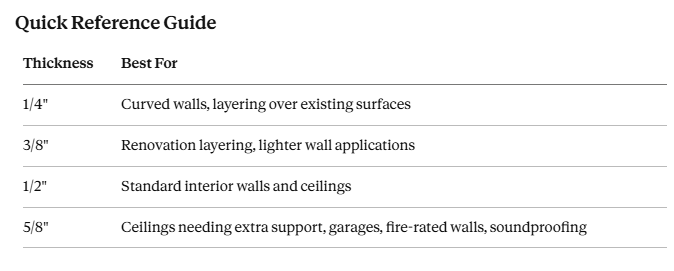
- Curved walls or archways, where flexibility matters more than strength
- Layering over existing walls during a renovation, without adding significant bulk
- Covering surfaces that don't need structural support, like decorative accents
Because it's thin and less rigid, 1/4" drywall isn't a good choice for most standard wall or ceiling applications on its own.
3/8" Drywall
Slightly more durable than 1/4", this thickness is often used for:
- Renovation work, layered over existing drywall or plaster
- Some interior wall applications where a lighter board is preferred
Like 1/4" board, 3/8" drywall is less common in new construction and is more often seen in remodeling projects.
1/2" Drywall
This is the most widely used thickness for residential construction, and for good reason. Half-inch drywall strikes a balance between affordability, ease of installation, and durability. It's commonly used for:
- Interior walls in most homes
- Ceilings, when installed with proper spacing between framing to prevent sagging
- General remodeling and new construction projects
If you're not sure what thickness a project calls for, 1/2" is the standard starting point for most walls.
5/8" Drywall
The thickest commonly available option, 5/8" drywall is favored when strength, soundproofing, or fire resistance are priorities. It's typically used for:
- Ceilings, especially when framing spacing is wider and extra rigidity is needed to prevent sagging
- Garages and shared walls, where fire-rated drywall (often labeled Type X) is required by code
- Commercial buildings, where fire ratings and durability standards are stricter
- Soundproofing applications, such as shared walls between units or rooms where noise reduction matters
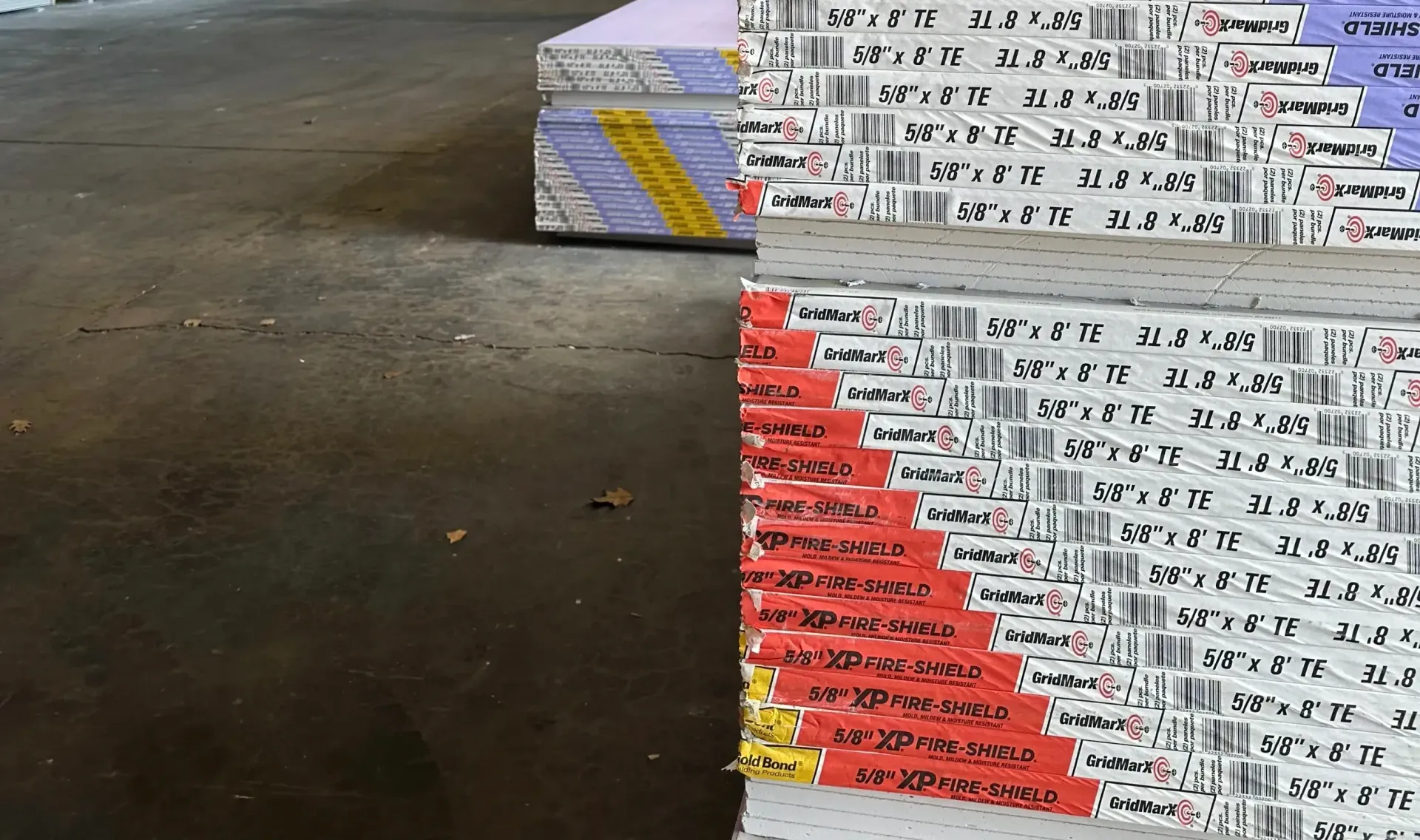
Type X fire-rated drywall, which is usually 5/8" thick, contains added materials that slow the spread of fire and is often required in garages, mechanical rooms, and multi-family construction.
When in Doubt, Ask
Building codes can vary depending on your project type and location, and certain applications — like garages or multi-family buildings — often have specific requirements for fire-rated drywall. If you're unsure which thickness or type is right for your project, it's always worth checking local code requirements or asking your supplier before you order.
Get the Right Materials, Delivered Fast
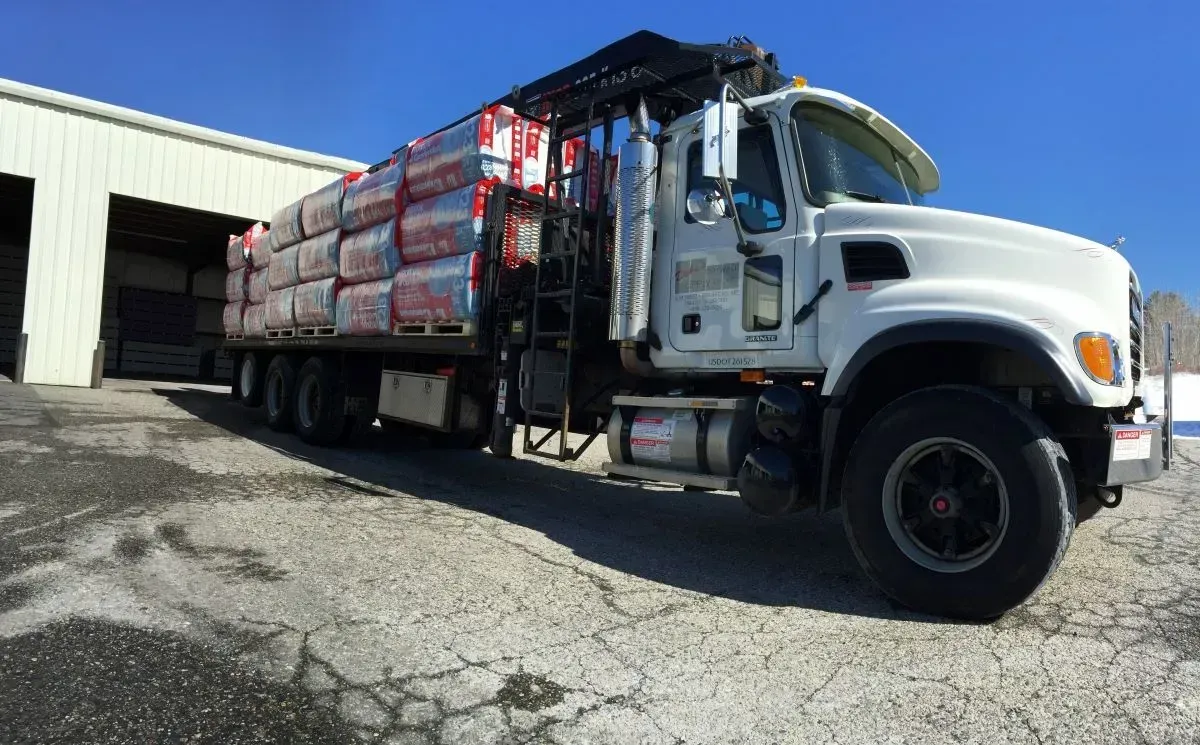
At Dube's Drywall Supply, we stock a full range of drywall thicknesses and types to fit any project, from small home repairs to large commercial builds. Our team can help you choose the right materials for your specific job, and with our same-day delivery service, you won't have to wait to get started.
Call us at 207-284-4721 or 888-333-9559, or contact us online to talk through your project and get the right drywall delivered to your job site.
Quick Reference Guide